
Tuesday, July 12, 2011

Sunday, June 12, 2011
Medical Marijuana Gardener
Yep...we live in Santa Cruz. Here's a local job posting for a Medical Marijuana farmer position; not that I'm gonna stop being the pastor of our church in Santa Cruz or anything like that...
You must already have current Medical Marijuana Approval, or be willing to apply for it. If so, I will pay for medical evaluation, and securing your State of California issued Medical Marijuana Identification Card.
You must be familiar with organic gardening principles and their application, or be willing to learn them.
You must be neat, clean and thorough in all areas of work.
You must be dependable, trustable, and honestly believe in the benefits of using marijuana both personally and as a safe & sane alternative to many of the products/practices now destroying our planet's integrity.
You must be self-motivated...NO SLACKERS NEED APPLY, all egos left at front gate...well, mostly!
The work can vary from as little as 9 or 10 hours to over 40 hours a week.
The work includes planting-through-harvesting; helping take care of growing plants, checking each plant for/removing yellowing leaves, thoughtful pruning, keeping the growing areas (green house, and indoors) neat and clean, staking, bracing and other wise supporting the plants as they grow and especially the flower clusters as they develop. Your finesse and patient gentleness are a must.
Further opportunity exists to learn how to properly dry, cure, and manicure so as to maintain highest levels of fragrance, flavor and medical efficacy.
Also, advanced breeding techniques can be learned all of which are cross-transferrable for successfully growing a wide range of food crops, many types of ornamentals as well.
As long as responsibilities are carried out your schedule is flexible.
Numerous other perks can come along with this job depending on your personality, dedication and length of employment. These include some meals, live music shows (reggae, Further, blues and rock, etc.) access, travel and Hawaii vacations, just to mention a few.
Once learned the skill sets that go with this job will empower you with abilities, and contacts, that will remain with you, can help you, throughout your life. This is not a "McJob", but it will be working for the benefit of others as well as yourself as a way of finding and maintaining your own independence free from toiling for a system that cares little, really, about you. Beyond its economic aspect, this plant deals directly with our spiritual and karmic advancement, if you also believe this then this could be the job for you.
Blessings to all who even read this.
Oh, pay starts at $20.00/hour. You must be responsible for keeping your own IRS forms/payments.
You must already have current Medical Marijuana Approval, or be willing to apply for it. If so, I will pay for medical evaluation, and securing your State of California issued Medical Marijuana Identification Card.
You must be familiar with organic gardening principles and their application, or be willing to learn them.
You must be neat, clean and thorough in all areas of work.
You must be dependable, trustable, and honestly believe in the benefits of using marijuana both personally and as a safe & sane alternative to many of the products/practices now destroying our planet's integrity.
You must be self-motivated...NO SLACKERS NEED APPLY, all egos left at front gate...well, mostly!
The work can vary from as little as 9 or 10 hours to over 40 hours a week.
The work includes planting-through-harvesting; helping take care of growing plants, checking each plant for/removing yellowing leaves, thoughtful pruning, keeping the growing areas (green house, and indoors) neat and clean, staking, bracing and other wise supporting the plants as they grow and especially the flower clusters as they develop. Your finesse and patient gentleness are a must.
Further opportunity exists to learn how to properly dry, cure, and manicure so as to maintain highest levels of fragrance, flavor and medical efficacy.
Also, advanced breeding techniques can be learned all of which are cross-transferrable for successfully growing a wide range of food crops, many types of ornamentals as well.
As long as responsibilities are carried out your schedule is flexible.
Numerous other perks can come along with this job depending on your personality, dedication and length of employment. These include some meals, live music shows (reggae, Further, blues and rock, etc.) access, travel and Hawaii vacations, just to mention a few.
Once learned the skill sets that go with this job will empower you with abilities, and contacts, that will remain with you, can help you, throughout your life. This is not a "McJob", but it will be working for the benefit of others as well as yourself as a way of finding and maintaining your own independence free from toiling for a system that cares little, really, about you. Beyond its economic aspect, this plant deals directly with our spiritual and karmic advancement, if you also believe this then this could be the job for you.
Blessings to all who even read this.
Oh, pay starts at $20.00/hour. You must be responsible for keeping your own IRS forms/payments.
Monday, May 23, 2011
Now you tell me...
“Pastoral work is slow and tedious. Be patient. It’s not easy or exhilarating. It’s plodding. In some ways its easy. Just stay there and be faithful. Pray. Know the names of the people in your community. Trust them and see them as blossoming saints, even if they don’t act like it.” Eugene Peterson
God, help me learn this lesson for our church in Santa Cruz.
God, help me learn this lesson for our church in Santa Cruz.
Monday, May 16, 2011


Friday, May 13, 2011
Church Success
"When the church is driven more by the idea of success rather than obedience, it really hasn't traveled far off the road called failure."
A homeless person in Santa Cruz California
A homeless person in Santa Cruz California
Friday, April 29, 2011
Practice makes...Real
What is the devotional life? What does it mean to be "saved?" What's the resurrection got to do with: Work, bills, the environment, sex, beer, coffee, career, hate, or any of the other aspects of "life?" Sadly, we've become professionals at seeing certain things as spiritual & other things as, well, just normal life. This isn't how it's supposed to be & as a community in Santa Cruz we want to live out our faith now.
All of this become even clearer when we take Communion as a church. Communion isn't a reassurance that one day we'll enjoy God without any issues; Communion is God's evident reassurance that we are to enjoy Him NOW. The Bread & the Wine aren't mystical things taken from the world transformed into something other-worldly; the Bread & the Wine are normal things of the world taken into ourselves that we might realize life is spiritual. His whole self was crucified & risen to redeem my whole self all the time...all of me...all the time.
Here's a great quote:
"Why is it that we look upon our salvation as a moment that began our religious life instead of the daily life we receive from God?" Dallas Willard
When we think about what it means to be a church we should be certain about these things: We're alive in Christ NOW. We're a part of the resurrection NOW. The church & our church in Santa Cruz is the body of Christ NOW. We are a part of the New Creation NOW. Work is worship TODAY.
All of this become even clearer when we take Communion as a church. Communion isn't a reassurance that one day we'll enjoy God without any issues; Communion is God's evident reassurance that we are to enjoy Him NOW. The Bread & the Wine aren't mystical things taken from the world transformed into something other-worldly; the Bread & the Wine are normal things of the world taken into ourselves that we might realize life is spiritual. His whole self was crucified & risen to redeem my whole self all the time...all of me...all the time.
What's it mean to live the resurrected life in Santa Cruz (or anywhere else) NOW?
Sunday, April 17, 2011
The Last Supper

In Grad school I read a book where two followers of Jesus enjoyed communion with some homeless brothers & sisters; they used Pepsi & Donuts. There is a tremendous breadth to Jesus, the Kingdom, & Communion. As I reflect on "who" is able to take communion, I must admit my circles are growing wider. Why? Because "sinners" cannot corrupt the body & blood of Christ; it is they who will become corrupted by: Truth, Love, Grace, Kingdom, & the Reality found in God through Jesus.
Monday, April 04, 2011
Stumble Not
9 Jesus answered, “Are there not twelve hours of daylight? Anyone who walks in the daytime will not stumble, for they see by this world’s light. 10 It is when a person walks at night that they stumble, for they have no light.”
Friday, April 01, 2011
Great thoughts from a local pastor.
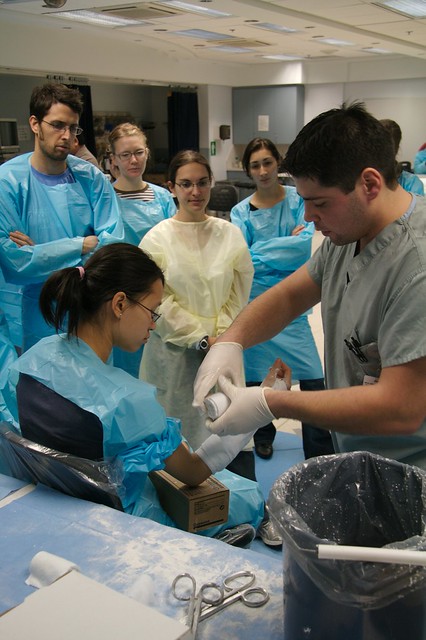
My sister-in-law recently graduated from one of the top medical schools in the country. It has achieved that status not by being the biggest, but because of the quality of students it turns out and the number treatment-breakthroughs that are discovered there.
Similarly, our churches (or Bible studies, or worship teams, or whatever other ministry-effort we're leading) should not be evaluated by their size, but on what is happening in the lives of those who are there.
Here are a few other parallels that have crossed my mind:
- Most med-schools also have hospitals attached. What a great picture of church! Everyone is welcome... nobody is shamed or turned away. However, entrance into the hospital does not guarantee entrance into the attached med-school. At our church, what we're looking for in people who would aspire to ministry leadership are servant-heartedness (my spell-check doesn't know that word), teachability (a desire to learn things that I don't already know), accountability (a desire to be linked up with others in a growth-process), and repentance (an eagerness to have my thinking changed by God).
- We have more "students" than "doctors" and the learners are the ones doing the hands-on work. While patients at med-school hospitals might prefer to have full-fledged doctors doing the surgeries, often students are involved in the process. At church, it's the same. Our pastoral team and Delta leaders' jobs are not to do the ministry directly, but to mobilize and connect people who are learning how to pray and counsel with those who need it (all of us). Interestingly, studies have shown that (despite patients' nervousness) the care at med-school hospitals is better than at non-teaching hospitals.
- For patients, healing is the goal. Everybody hopes that a trip the hospital is brief! Some treatments can take time, but every patient should aspire to wholeness. The point of coming to the hospital is to be healed so that we can get on with our lives. Sometimes church can seem like an endless cycle of going into the hospital! Instead, let's all set our sights on fruitful ministry (getting off the sick-bed and into the white gown and stethescope).
- For students, each day is lived with graduation day in mind. The point of this school is not just to build a bigger and bigger school and hospital... but to SEND out these students into the wide world where they are needed. I am asking God to give me big dreams for those who call our church home... and the wisdom to equip them for what God is asking them to do. And I want to get better at planning a church-program that will love, mend, train, and send people in a period of a few years.
It's helpful to spend time thinking about what we're trying to do with this thing called "church." Without proactive thought, we'll end up just doing stuff out of tradition or routine. Neither will get us to our objective ("Go therefore and make disciples...").
Friday, March 18, 2011
Who's Your Momma?

I've recently realized the most prominent issue within mankind. One would assume it is: Greed, perversion, hate, sexual sin, or something else, but it isn't. It's rebellion. I'm the captain of my own ship.
I too wrestle with this, yet as I sink within the waters of my own choices, countless have been the times when the church has wrestled me from my own determination to find freedom through my distorted lens of reality.
Thank you mother church for offending my sinful nature. You are the water-wings that keep me afloat as I have been so determined to drown when I wrench the wheel of my ship from the Holy Spirit. Thank you Father, Spirit, & Son...& Mother.
"He can no longer have God for his Father, who has not the Church for his mother."St. Cyprian
Monday, February 28, 2011
Santa Cruz: A New Kingdom

I'm a part of a group of pastors in Santa Cruz who read a book a month & then gather to discuss, amongst other things, the book we've read. This month we're reading: "Surprised By Hope" by N.T. Wright. It's been a great read so far, & I must admit I'm a bit ignorant as to the meaning of the Resurrection now & for the life after.
N.T. Wright is tackling many questions including: "What do people believe in when they talk about life after death?" Moreover, what do we Christians believe when it comes to life after death? As N.T. Wright demonstrates we believe much more in "Heaven," then in the Resurrection of all believers. As my daughter said the other night at dinner, "People who believe in God go to Heaven. Those who don't go to Hell." Needless to say, I'm glad to be reading the book. Although her statement has some merit it's more a product of popular thought then thorough Biblical thinking.
One of the things I most appreciate about N.T. Wright's writings is his insistence upon the bridging of Jesus' arrival & our, the church, response in light of this in the world. He says, "It (The Resurrection) is not an absurd event within the old world but the symbol & starting point of the new world. The claim advanced in Christianity is of that magnitude: Jesus of Nazareth ushers in not simply a new religious possibility, not simply a new ethic or a new way of salvation, but a new creation."
Jesus is the beginning of a new creation. He is the catalyst of the Kingdom of God. This is incredible in so many ways, but the thing I find most amazing is that we, the church, are that new creation. We are the the greatest living example of the Resurrection. We are the Kingdom of God here & now. This was a huge issue in the first century. The church was one of the most obvious signs that something real had actually happened: A new community was now in existence where beforehand there was not. A group of people who desired to have their lives shaped by the Lord of the Cosmos; a people who desired to live out the values of the Kingdom. That's a big deal.
But what does the church mean in the world today? Jesus is the start of a new creation. We are the deposit in this world of that new creation. However, currently, to what end? Are we the lightning rod for the Kingdom God envisions to demonstrate here? Is the church, like a window into a house, a way for people to see: "Aha, that's what the Kingdom looks like." Clearly the answer is, in most cases, no. At least in Santa Cruz, when people think church they don't associate it with: The clear example of what God's Kingdom looks like here & now.
Somehow we (I) don't get the Resurrection; because if we did this world would look a lot more like the one Jesus came to inaugurate.
Friday, February 25, 2011
Big Ass Grasshoppers
I love spending time with people who aren't Christian. I find it incredibly refreshing to spend time with those whose interest in Jesus compels them to seek after the one who has perplexed & given life to the cosmos, which includes people like me.
One thing I like about spending time with those who are seeking God is how they describe the Biblical narrative in their own language. We Christians have our vernacular &, correct as it is, isn't as colorful as those who don't yet know "protocol."
As I've been coaching track at a local high school I've had the honor of helping some of the athletes see more clearly who God is. One athlete even agreed to start meeting with me each Friday at 6:15am. So, this morning we had our first "Bible Study." We started in proverbs, then moved to Mark, & finished, per his request, with the Four Horsemen of the Apocalypse.
My favorite quote from our time was when after reading Mark Chapter 1, as Mark describes John the Baptist wearing Camel hair & eating Locusts. As we passed through this description I asked, "Do you know what a locust is?" He replied, "It's like a big ass grasshopper. Right?" After he said this my soul grew warm as I enjoyed the company God had placed me in. As we sat in his car, the rain moving down the windshield painting our Bibles with refracted lights, I answered, "Yep, it's a big ass grasshopper."
One thing I like about spending time with those who are seeking God is how they describe the Biblical narrative in their own language. We Christians have our vernacular &, correct as it is, isn't as colorful as those who don't yet know "protocol."
As I've been coaching track at a local high school I've had the honor of helping some of the athletes see more clearly who God is. One athlete even agreed to start meeting with me each Friday at 6:15am. So, this morning we had our first "Bible Study." We started in proverbs, then moved to Mark, & finished, per his request, with the Four Horsemen of the Apocalypse.
My favorite quote from our time was when after reading Mark Chapter 1, as Mark describes John the Baptist wearing Camel hair & eating Locusts. As we passed through this description I asked, "Do you know what a locust is?" He replied, "It's like a big ass grasshopper. Right?" After he said this my soul grew warm as I enjoyed the company God had placed me in. As we sat in his car, the rain moving down the windshield painting our Bibles with refracted lights, I answered, "Yep, it's a big ass grasshopper."
Monday, February 21, 2011
I'm Too Busy
"I'm too busy." Really? Too busy? Too busy to: Pray, read, share, love, sit, rest, worship, etc. Too busy? Too busy.
I often wonder what we're too busy doing. Why is it that spiritual exercises: Service, prayer, reading, meditation, hospitality, or singing aren't refreshing to us; yet physical activity is something we can find time for (when we aren't MAKING time for movies).
Time released a new study on time, at least time spent in physical activity.
Time: Santa Cruz 4th most active city in the country
SANTA CRUZ - Time magazine has taken what they call geographical sloth distribution data from the Centers for Disease Control and compiled a list of the 15 most active cities in the country, placing Santa Cruz fourth on that list.
In reality, someone who says, "I don't have enough time to do that," isn't telling the truth (lying? maybe not sooo intentionally); because everyone has the same amount of time. What should be said is, "I don't find that activity valuable enough to devote what time I do have." That's a bit more honest. Right?
Please stop saying you don't have time; in reality that's all you have. It's a measure of value as to where you place yourself for a given period of time. I don't value that, but I do value this.
We do have time & we spend it on what we value most. It's never been about time, but I often find we blame it. Time isn't the issue; value is.
I wonder what SC would look like if it were rated: Ranked 4th in the nation for churches living out Kingdom values.
But, who has time for that? Too many new releases, trails to run, bodies to look at in the gym, & waves to surf.
& yes I do run ultra-marathons so I get the rub.
I often wonder what we're too busy doing. Why is it that spiritual exercises: Service, prayer, reading, meditation, hospitality, or singing aren't refreshing to us; yet physical activity is something we can find time for (when we aren't MAKING time for movies).
Time released a new study on time, at least time spent in physical activity.
Time: Santa Cruz 4th most active city in the country
SANTA CRUZ - Time magazine has taken what they call geographical sloth distribution data from the Centers for Disease Control and compiled a list of the 15 most active cities in the country, placing Santa Cruz fourth on that list.
In reality, someone who says, "I don't have enough time to do that," isn't telling the truth (lying? maybe not sooo intentionally); because everyone has the same amount of time. What should be said is, "I don't find that activity valuable enough to devote what time I do have." That's a bit more honest. Right?
Please stop saying you don't have time; in reality that's all you have. It's a measure of value as to where you place yourself for a given period of time. I don't value that, but I do value this.
We do have time & we spend it on what we value most. It's never been about time, but I often find we blame it. Time isn't the issue; value is.
I wonder what SC would look like if it were rated: Ranked 4th in the nation for churches living out Kingdom values.
But, who has time for that? Too many new releases, trails to run, bodies to look at in the gym, & waves to surf.
& yes I do run ultra-marathons so I get the rub.
Thursday, February 17, 2011
What or Whom?
Another great chapter from "The Christ of the Indian Road," is titled: What or Whom? Are we to believe in the "what" of our faith or is it centered upon a "whom?" Stanley Jones puts it sharply that we believe in a whom & not a series of whats.
Here are five great quotes from the book:
"Christianity with a what-emphasis is bound to be divisive, but this tendency is lessened with a whom-emphasis. Note the things that have created denominations in the west: baptism, human freedom, rites, ceremonies, dress--the points of division have been nearly all "whats."
"Only life can lift life. A doctor lay dying--a Christian doctor sat beside him & urged him to surrender & have faith in Christ. The dying doctor listened in amazement. Light dawned. He joyously said, 'All my life I have been bothered by what to believe, & now I see it is whom to trust.' Life lifted life."
"But the statement made above about Jesus coming out of an uninspired Book must be corrected a bit, for Jesus did not come out of the Book; it came out of Him. It did not create Him; He created it."
" We must call men not to loyalty to a belief but loyalty to a Person. We may be loyal to a belief & be dead spiritually, but we cannot be loyal to this Person & be other than alive spiritually. He creates belief. We do not get Jesus from our beliefs, we get our beliefs from Jesus."
"There is no real danger lest Jesus be lost among the many in all this, that it may end up in his being put in the Pantheon of Hinduism. Greece & Rome tried that & the Pantheons amid which he was placed are gone--Jesus lives on. He is dynamic, disruptive, explosive like the soft tiny rootlets that rend the monuments of man's pride. Like the rootlets he quietly goes down into the crannies of men's thinking, & lo, old forms & customs are broken up. Absorb him? you may as well talk about the moist earth in springtime absorbing the seed. The seed absorbs it, for it is life. Jesus is life. He will take care of himself."
Thanks E. Stanley Jones.
Here are five great quotes from the book:
"Christianity with a what-emphasis is bound to be divisive, but this tendency is lessened with a whom-emphasis. Note the things that have created denominations in the west: baptism, human freedom, rites, ceremonies, dress--the points of division have been nearly all "whats."
"Only life can lift life. A doctor lay dying--a Christian doctor sat beside him & urged him to surrender & have faith in Christ. The dying doctor listened in amazement. Light dawned. He joyously said, 'All my life I have been bothered by what to believe, & now I see it is whom to trust.' Life lifted life."
"But the statement made above about Jesus coming out of an uninspired Book must be corrected a bit, for Jesus did not come out of the Book; it came out of Him. It did not create Him; He created it."
" We must call men not to loyalty to a belief but loyalty to a Person. We may be loyal to a belief & be dead spiritually, but we cannot be loyal to this Person & be other than alive spiritually. He creates belief. We do not get Jesus from our beliefs, we get our beliefs from Jesus."
"There is no real danger lest Jesus be lost among the many in all this, that it may end up in his being put in the Pantheon of Hinduism. Greece & Rome tried that & the Pantheons amid which he was placed are gone--Jesus lives on. He is dynamic, disruptive, explosive like the soft tiny rootlets that rend the monuments of man's pride. Like the rootlets he quietly goes down into the crannies of men's thinking, & lo, old forms & customs are broken up. Absorb him? you may as well talk about the moist earth in springtime absorbing the seed. The seed absorbs it, for it is life. Jesus is life. He will take care of himself."
Thanks E. Stanley Jones.
Wednesday, February 16, 2011
Jesus through Experience
I just got back from a pastor's book club. 6-7 of us get together & discuss a book we've read the previous month. It's a wonderful time of argument, tension, & serious discussion, mixed with sarcasm, laughter, & friendship. It is a truly wonderful time. This month we read: "The Christ of the Indian Road;" by E. Stanley Jones. Mr. Jones is truly a theological find. He was described as the Billy Graham of India & his wealth of knowledge is radiant. Faced with unbelievable theological issues from a very spiritual culture, Stanley Jones is forced to search his soul & faith to find the very thing that makes Christianity worth living; thankfully, he doesn't shrink from the challenge.
Chapter: Jesus Through Experience.
Religion is the life of God in the soul issuing in the kingdom of God on earth. But first of all it is the life of God in the soul. Religion means realization. If not, then religion soon means ritual, & that means death. The early disciples had little ritual but a might realization.
Chapter: The Great Hindrance
(To Ghandi, his friend.) What would you suggest that we do to make (Christianity naturalized in India?)
"I would suggest, first, that all of you Christians must begin to live more like Jesus."
"Second," he said, "I would suggest that you must practice your religion without adulterating or toning it down."
"Third, I would suggest that you must put your emphasis upon love, for love is the center & soul of Christianity."
"Fourth, I would suggest that you study the non-Christian religions & culture more sympathetically in order to find the good that is in them, so that you might have a more sympathetic approach to the people."
Ghandi has some other amazing things to say about Jesus in this book.
E. Stanley Jones is a serious theological find.
Chapter: Jesus Through Experience.
Religion is the life of God in the soul issuing in the kingdom of God on earth. But first of all it is the life of God in the soul. Religion means realization. If not, then religion soon means ritual, & that means death. The early disciples had little ritual but a might realization.
Chapter: The Great Hindrance
(To Ghandi, his friend.) What would you suggest that we do to make (Christianity naturalized in India?)
"I would suggest, first, that all of you Christians must begin to live more like Jesus."
"Second," he said, "I would suggest that you must practice your religion without adulterating or toning it down."
"Third, I would suggest that you must put your emphasis upon love, for love is the center & soul of Christianity."
"Fourth, I would suggest that you study the non-Christian religions & culture more sympathetically in order to find the good that is in them, so that you might have a more sympathetic approach to the people."
Ghandi has some other amazing things to say about Jesus in this book.
E. Stanley Jones is a serious theological find.
Friday, February 11, 2011
Jean Vanier: On Sex
This is my wife's post, so since we're one in flesh--often--I figured this would be good on my blog too! Enjoy.
The Newleywed Bed
I seem to be passionate lately about sharing the naked truth about matters of sexuality. There are a lot of things I learned growing up, but I am a late bloomer when it comes to this conversation topic. As a newlywed I would have greatly appreciated some honest talks from women who knew the truth about normal and healthy sexuality rather than basing my knowledge and expectations on TV and other popular media. There may have been women around who were willing to share, but the truth is when it came to questions about sexuality, I just never asked!
So far, I've found little truth about healthy sexuality on TV. As a newlywed mentioned to her virgin friend, "I haven't seen a sex scene yet that is realistic!" She's right. Hopefully, though, she at least has someone to steer her to some honest resources and candid conversations about realistic expectations and healthy sexuality. Hopefully she finds out that she is somewhere in the realm of normal in her newlywed experience.
Some friends and I are currently reading Man and Woman God Made Them by Jean Vanier. I am more than willing to talk openly about sexuality, but not so graceful about bringing up the subject on my own. This book has been the perfect way for us to start good conversations and shed some light on many popular myths. The following quote started a wonderful conversation since most virgins are shocked by Vanier's comments about the time of adjustment and how long it may be before a woman experiences an orgasm.
"Sexual education is not so much a practical manual of what one must do and how, as a basis for harmonious sexual relationship, but rather a matter of helping people to be at ease with their own sexuality. It implies growth in the capacity to see the other as someone with needs. It also includes helping people to face the challenges and difficulties involved in relationships. This is, in fact, apprenticeship for true love. In most couples it takes a long, long time for one, or both, of the persons to have fulfilling and joyful sexual relationships. Often it is the woman who has the longest period of adjustment. There can be pain involved, or failure to have an orgasm. This can last for years. This is a real learning process that requires much sensitivity towards the other (and most often it is the man who has to learn to be sensitive to the woman's body). It is important for young people to know that sexual relationships don't 'work', are not completely fulfilling, right from the start."
I haven't seen that scene in a movie yet.
I find Jean Vanier's delivery of truth in this book to be refreshing. Why don't we talk about this stuff more often? Okay, okay, as I mentioned earlier, I am not the most graceful at bringing up intimate issues. It's not like I'm going to say, "Hey friend! How's your week going? By the way, it may be a year or more before you experience an orgasm. Just thought you should know."
But I am, however, going to find a way to expose as much truth as possible in my daily life. For me this means intentionally choosing a book on sexuality to read with some friends. It means posting faithfully about healthy sexuality when I find resources worth sharing.
It also means getting used to pointing out false truths that I watch on movies with my kids (regarding sexuality, or any other myths I see presented in movies we watch together). I might even pause the movie and say, "This is just a movie. This movie is pretend. In real life it's more like this..." I am certainly not going sit there and by my presence place my seal of approval on some dream world notions about life and sexuality that will be cruelly crushed when they come face to face with reality. Nope. Not me. I am going to speak truth and hopefully equip my kids, my friends, (and heck, you, the general public who may read my blog) with some tools to deal with reality.
So today there are some myths to dispel. Sex is not all about me, nor is it all about sensual pleasure (though pleasure is a definite bonus). In a healthy relationship there is a lot of give and take, a lot of communication and sensitivity to the other person's needs. Learning about making love is a process that is both beautiful and awkward in the best sense of the word.
Let me tell you that more complete sexual pleasure usually comes a long way into a committed relationship as two people become more and more in tune with one another, more and more intimately acquainted. Shy and clumsy, strange and funny, practice and failure are all part of real life picture perfect. Not only does intimacy become more pleasurable over time, but the journey made with one committed partner is truly better than any movie could ever depict.
I fear that there are many women in particular who are sadly disappointed in their sexual experiences as they seek love and affection from a man who is not committed for the long haul. Also, I fear that many newlyweds are left with feelings of failure and insecurity when they realize that their intimate life is not picture perfect like they imagined. They have simply been presented with an unrealistic and highly romanticized 'picture perfect'.
Much of this could be avoided, or at the least understood, if we are faithful to speak openly and candidly about sexuality with our kids and other who are looking to us for guidance. Trust me, I am not the best at this, but I am more than willing to embarrass myself in the process. I think it's worth it to be real for the sake of relational and sexual health that should be the blessing of every marriage and every marriage bed!
Please join the conversation in the comments section. I value your opinion and would love to hear your perspective. Feel free to be "anonymous" if that enables you to share more freely, or email me if you want to discuss more in private.
The Newleywed Bed
I seem to be passionate lately about sharing the naked truth about matters of sexuality. There are a lot of things I learned growing up, but I am a late bloomer when it comes to this conversation topic. As a newlywed I would have greatly appreciated some honest talks from women who knew the truth about normal and healthy sexuality rather than basing my knowledge and expectations on TV and other popular media. There may have been women around who were willing to share, but the truth is when it came to questions about sexuality, I just never asked!
So far, I've found little truth about healthy sexuality on TV. As a newlywed mentioned to her virgin friend, "I haven't seen a sex scene yet that is realistic!" She's right. Hopefully, though, she at least has someone to steer her to some honest resources and candid conversations about realistic expectations and healthy sexuality. Hopefully she finds out that she is somewhere in the realm of normal in her newlywed experience.
Some friends and I are currently reading Man and Woman God Made Them by Jean Vanier. I am more than willing to talk openly about sexuality, but not so graceful about bringing up the subject on my own. This book has been the perfect way for us to start good conversations and shed some light on many popular myths. The following quote started a wonderful conversation since most virgins are shocked by Vanier's comments about the time of adjustment and how long it may be before a woman experiences an orgasm.
"Sexual education is not so much a practical manual of what one must do and how, as a basis for harmonious sexual relationship, but rather a matter of helping people to be at ease with their own sexuality. It implies growth in the capacity to see the other as someone with needs. It also includes helping people to face the challenges and difficulties involved in relationships. This is, in fact, apprenticeship for true love. In most couples it takes a long, long time for one, or both, of the persons to have fulfilling and joyful sexual relationships. Often it is the woman who has the longest period of adjustment. There can be pain involved, or failure to have an orgasm. This can last for years. This is a real learning process that requires much sensitivity towards the other (and most often it is the man who has to learn to be sensitive to the woman's body). It is important for young people to know that sexual relationships don't 'work', are not completely fulfilling, right from the start."
I haven't seen that scene in a movie yet.
I find Jean Vanier's delivery of truth in this book to be refreshing. Why don't we talk about this stuff more often? Okay, okay, as I mentioned earlier, I am not the most graceful at bringing up intimate issues. It's not like I'm going to say, "Hey friend! How's your week going? By the way, it may be a year or more before you experience an orgasm. Just thought you should know."
But I am, however, going to find a way to expose as much truth as possible in my daily life. For me this means intentionally choosing a book on sexuality to read with some friends. It means posting faithfully about healthy sexuality when I find resources worth sharing.
It also means getting used to pointing out false truths that I watch on movies with my kids (regarding sexuality, or any other myths I see presented in movies we watch together). I might even pause the movie and say, "This is just a movie. This movie is pretend. In real life it's more like this..." I am certainly not going sit there and by my presence place my seal of approval on some dream world notions about life and sexuality that will be cruelly crushed when they come face to face with reality. Nope. Not me. I am going to speak truth and hopefully equip my kids, my friends, (and heck, you, the general public who may read my blog) with some tools to deal with reality.
So today there are some myths to dispel. Sex is not all about me, nor is it all about sensual pleasure (though pleasure is a definite bonus). In a healthy relationship there is a lot of give and take, a lot of communication and sensitivity to the other person's needs. Learning about making love is a process that is both beautiful and awkward in the best sense of the word.
Let me tell you that more complete sexual pleasure usually comes a long way into a committed relationship as two people become more and more in tune with one another, more and more intimately acquainted. Shy and clumsy, strange and funny, practice and failure are all part of real life picture perfect. Not only does intimacy become more pleasurable over time, but the journey made with one committed partner is truly better than any movie could ever depict.
I fear that there are many women in particular who are sadly disappointed in their sexual experiences as they seek love and affection from a man who is not committed for the long haul. Also, I fear that many newlyweds are left with feelings of failure and insecurity when they realize that their intimate life is not picture perfect like they imagined. They have simply been presented with an unrealistic and highly romanticized 'picture perfect'.
Much of this could be avoided, or at the least understood, if we are faithful to speak openly and candidly about sexuality with our kids and other who are looking to us for guidance. Trust me, I am not the best at this, but I am more than willing to embarrass myself in the process. I think it's worth it to be real for the sake of relational and sexual health that should be the blessing of every marriage and every marriage bed!
Please join the conversation in the comments section. I value your opinion and would love to hear your perspective. Feel free to be "anonymous" if that enables you to share more freely, or email me if you want to discuss more in private.
Tuesday, February 01, 2011
No Power Lovin'
As I was reading through the latest Cutting Edge (The Vineyard Churches Publication) I read the article on Power Evangelism. When asked what he meant by "power evangelism" the writer said, PE "is using the "power gifts:" healing, prophecy, deliverance, & ministry of the manifest presences of God-to reach people." Oddly, love didn't make the list of "power gifts." Love isn't power? God IS love, but it's not a power gift? Paul explicitly says love is the greatest gift, yet it's not a "power gift?" Weird. Wrong. Unbiblical. Sad. Reflective. Unfortunate.
I am thankful for the multitudes of those who are great lovers of God who never prayed in tongues or prophecied. E. Stanely Jones; Mother Theresa; Jean Vanier; Henry Nouwan; Charles Studd; Francis of Assisi. These incredible people remind me, as I flounder in the shadow of Apostolic shadows, that "love is the greatest gift." I am thankful too of my "empowered" brothers & sisters; I'm blessed to witness the miraculous in & around me.
Yet if love isn't the greatest of the "power gifts" than we've missed the point. In fact we've missed Jesus.
I am thankful for the multitudes of those who are great lovers of God who never prayed in tongues or prophecied. E. Stanely Jones; Mother Theresa; Jean Vanier; Henry Nouwan; Charles Studd; Francis of Assisi. These incredible people remind me, as I flounder in the shadow of Apostolic shadows, that "love is the greatest gift." I am thankful too of my "empowered" brothers & sisters; I'm blessed to witness the miraculous in & around me.
Yet if love isn't the greatest of the "power gifts" than we've missed the point. In fact we've missed Jesus.
Monday, January 31, 2011
Epiphany 4: Jesus Loves Lepers
Here's a video we used during worship to celebrate the 4th week of Epiphany.
Friday, January 21, 2011
What would Jesus Brew?

As we approach the 3rd Sunday in Epiphany we look at the first of Jesus' miracles: Turning water into wine. It's odd to me that Jesus would do such a thing; or, should I say, it's odd only because our understanding of who Jesus is, the Kingdom of God, alcohol, & parties are distorted.
Alcohol is a theological hornets nest in almost any room filled with Christians. Some use it to prove they're: Mature, unreligious, or part of the intelligentsia. Others decry it as an ultimate evil: Prohibition! It seems to be a very polarizing subject.
Yet Jesus neither made wine to show he wasn't a Pharisee (which He was) or that He was cool (which He still is); & Jesus, knowing western Christianities view on alcohol didn't reject His mothers request to make it. He made a product people used & still use to sin.
Sadly, I think this is just one area we see Jesus distorted through our theological lenses. I see many people whose faith is constipated with erroneous theology, anger, frustration, disappointment, & sadness. But this isn't because of Jesus. He is pure, undefiled, & a perfect representation of the Father. We are the ones who approach Him with conditions, theologies, expectation, doctrines, & other distorted tails we blindly attempt to pin on the donkey. However, thankfully our theological donkey tales never stick to Him. He is the reality we should aspire to in theology, which leads to Life as He intended, using the things of the world He created in ways that honor Him.
I'm thankful Jesus was a wine maker. It's challenging because it opens up the Kingdom of God to me. It demonstrates a faith of parties, fun, fellowship, & laughter. We've got much to learn from Jesus.
Monday, January 10, 2011
Addiction

Last night was our time of community worship & we did things a bit differently. There are several reasons why, three actually, that are leading me to imagine new spiritual activities as we gather.
First: On ITunes you can download podcasts of just about anybody; & all of this for free (mostly). Thankfully Eugene Peterson has several podcasts from various talks he has given throughout the country. The talks I have been listening to revolve around his latest 5 books, or as his wife calls them: Peterson’s Pentateuch. As a pastor, scholar, & practitioner of the faith for over 50yrs, Eugene has so much wisdom to share with us.
One of the themes he continually, & appropriately, works through is his dissatisfaction with the Evangelical church. I’m thankful for his perspective on this because he’s seen so much & this is the field I find myself in. He continually brings up illustrative points as to how we’ve created something so distant from Biblical & historical Christianity. I must admit as I listen to Eugene I am equally amused & convicted by his wisdom. He shares how in so many ways we have created a generation of Christian culture addicts; they sit, listen, tithe, & go their way. He, without reservation, details how we have not done so well at helping people to access the Holy One as a way of life.
All that to say this: He was invited to Seattle Pacific to do a sermon series. What was most intriguing to me was that each one of his "sermons" wasn’t a sermon; it was a story. He passionately, profoundly, succinctly, & effectively told stories to a listening audience. As I was running & listening to this I found myself smiling often because I was engrossed in the story he was telling. It was God’s story; it was my story. It wasn't a 3 point sermon; he told a story. As I look at world history one thing is beyond a doubt: Stories, & good story tellers, are a cross-cultural hit. Stories have been & always will be one of THE most effective ways to share information. Thanks Eugene.
Second: Reading through Charles Kraft’s book on communication has been illuminating. He continually demonstrates how our communication models aren’t really comparable to God’s via. Jesus’ communication on earth. Since this book is written to those who actually care about Christian communication one natural audience for this book is pastors, so naturally the topic of “sermon” is brought up many times. Dr. Kraft does an outstanding job putting “preaching” within its proper context; he never says monologues are bad; yet he, like many other scholars, reminds us: It is one of THE least effective ways of communication. This, for most of us isn’t a new idea; however, & this is a big however: I guarantee that the next time I sit in a room of pastors & we discuss how church is going 8 out of 10 pastors will share with the group what they’re monologue topic is. Preaching: Fresh, exciting, humorous, convicting, accessible, apologetics, power-point, passionate, etc; is one the least effective means of communicating. All of this has its roots, not is the NT as Dr. Kraft make obvious, but in the Reformation. Jesus’ monologues, but what percentage of his communication is monologue? Paul, Peter, John? Actually, John did a lot of monologues: John Calvin. But he ruled his own city, so he could monologue if he wanted to.
Last: I have continually been asking myself, “Who are the 95% who don’t follow Jesus & find church to be irrelevant to their spiritual needs?” Thankfully, God placed an awesome group of people around me to help me see who they are & how they worship their gods. As I recently attended one of their worship times I was struck by several things: The music was simple, repeatable, & had a moving tempo. The scene was sensual (not sexual, but there was a bit of that too!); people were dancing, others were blowing incense in your face, people were sitting & meditating. There was a ton of worship happening & there was no teaching, monologue, or preaching. As I reflected on “church” I imagined the opposite happening: There’s a ton of monologue, but not so much worship. Too, as I sat in the room with these passionate worshippers I asked myself, “The goal is to introduce these people to the living God & the gathering of the saints is one of the main ways this happens. How would any of these people respond if I asked them to leave this way of worship in exchange for a neat Bible & a comfy chair where they could listen to me extrapolate Biblical truths in the name of solid apologetics.” I at once was struck by the difference between their active worship with our static worship. But, in our faith (generally) when the greatest amount of space is given to monologue by the experts, what are the people to do, but sit, listen, & be amazed at the oratory skills of the speaker?
So last night, which was the first Sunday of Epiphany, I didn’t preach. We sang songs to God, I shared a story about the pain of a dark creation giving way to joy, as the stars lit the way for the Magi to worship the light born in a manger. Too, I told the story of the light being born in my life. We then practiced Lectio Divina on the text where Jesus says, “those who practice my words build upon the rock.” We: Read, Meditated, Prayed, & Contemplated the Word; Together.
Where this is all headed is a mystery to me...
Subscribe to:
Posts (Atom)